What does predictive maintenance mean?
Predictive maintenance uses observed equipment condition to help time maintenance decisions. NIST's maintenance guidance discusses observations such as temperature, sound and vibration in this context. A threshold alert, anomaly detection, fault diagnosis and remaining-life prediction are different tasks with different evidence requirements. A sensor alarm does not automatically demonstrate prediction. State which task the first project is actually intended to perform.
Begin with the equipment problem and the decision that could change. A frequently replaced minor component and a pump that causes a long production interruption may deserve different priorities. Assess operating impact, the opportunity to intervene and the practicality of collecting useful data. This gives a better basis for a pilot than selecting a model family before identifying an actionable maintenance need.
Which sensors should you start with?
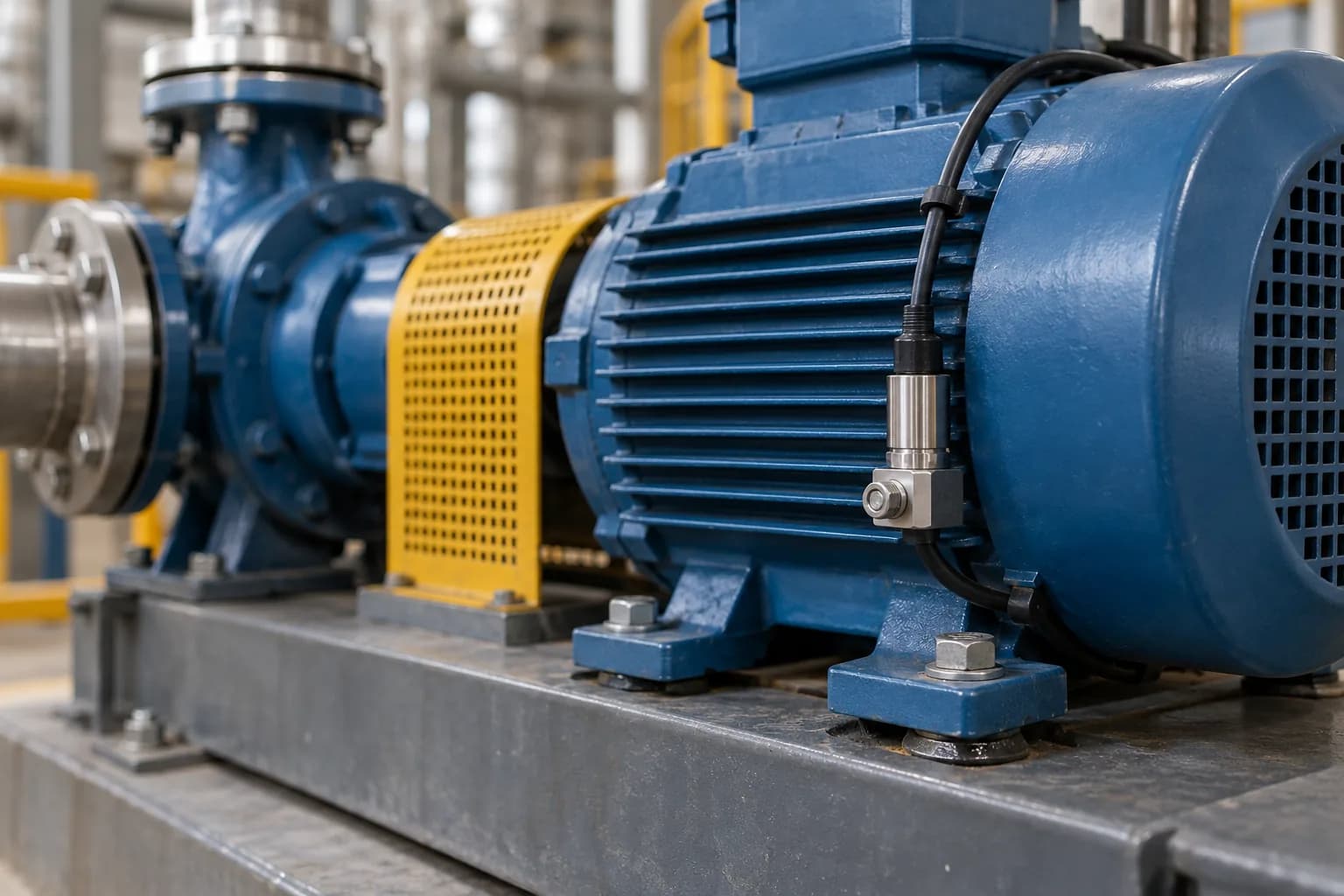
Select sensors around the suspected failure mechanism. Vibration, temperature, current and process measurements answer different questions. Work with maintenance staff to identify observable symptoms and normal operating conditions. Record installation position, attachment method, sampling requirements and equipment identity. A sensor installed at the most convenient location may not be measuring the physical behavior needed for the intended decision.
The first useful output may be a repeatable measurement setup rather than a model. Establish synchronized records and an equipment-level history. Record sensor replacement and reinstallation after maintenance. Otherwise a changed mounting position can be mistaken for a change in machine health. Inspect those practical collection effects before treating a pattern in the dataset as evidence of a physical fault.
Why do maintenance records matter as much as sensor data?
Evaluation requires knowing what happened and when. Separate the reported symptom, performed action, replaced component and final check. A generic 'maintenance completed' entry may not identify the fault. Retain operating context such as load changes, planned shutdowns and new production conditions. Those can change a measurement even when the equipment has not developed a fault.
Does detecting an anomaly mean predicting a failure?
No. An anomaly indicates a departure from a chosen reference behavior, without necessarily explaining its cause. A new load, changed mounting or sensor problem can also produce one. Present an alert with the interval, measurements and operating context that maintenance staff can inspect. Do not turn an unverified deviation into a definite diagnosis. Remaining-life prediction needs its own suitable event history and evaluation approach.
How should false alarms and warning time be evaluated?
Evaluate how many alerts merit investigation, how many important events are missed and whether the warning leaves enough time to act. Preserve chronology when separating development and evaluation data, and prevent segments from the same event leaking across the split. Compare the proposed method with a simple threshold or the existing maintenance process. Include the additional review workload instead of reporting only an aggregate accuracy figure.
Which scope can be explored with Gokbilge Tech?
Sensor integration is relevant to physical measurement, Visual Data Core to the data layer, and forecasting model improvement to evaluation work. Share the equipment type, targeted maintenance problem, existing measurements and maintenance history. These links do not imply that every product already predicts faults. Define sensor coverage, data preparation and any model work explicitly for the proposed pilot.
Technical references
Want to apply this approach to your system?
Discuss your technical requirements →