
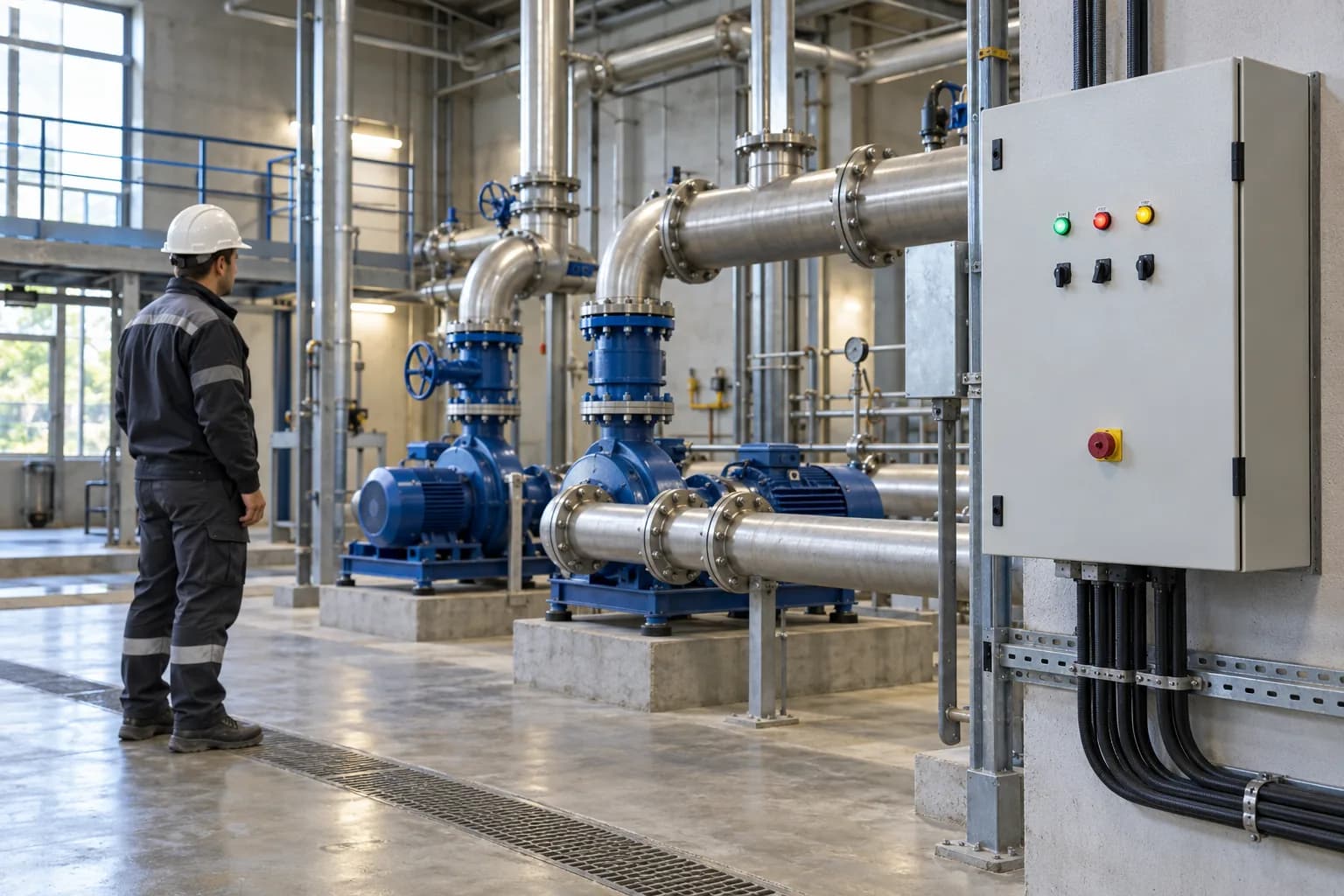
What does SCADA do?
SCADA brings field measurements and equipment states into a supervisory environment where operators can observe a process and perform authorized control actions. In a pumping station, pressure, tank level, motor state and communications status can share one operational context. The useful outcome is an operator who can identify what happened, where it happened and what needs attention. An attractive dashboard alone does not establish that workflow.
Start by naming an operational decision: recognizing an overnight stoppage, spotting a disconnected remote station or reconstructing an earlier incident. Each requires a data source, a responsible person and an expected response. Write those down before selecting screens. Otherwise the project can collect many values while leaving the most important operating question unanswered.
How is SCADA different from a PLC?
A PLC executes local programmable control logic, while SCADA provides a wider supervisory view of equipment and processes. Controlling a valve locally and reviewing its week-long event history are different tasks. Define what the local controller does if the supervisory connection disappears. A project should not accidentally make a necessary local operating behavior depend on someone keeping a central browser open.
Check protocols, tag definitions and write permissions before comparing controller brand lists. Two devices using the same protocol can assign very different meanings to their registers. Verify scaling, units, timestamps and error states against the actual installation. Protocol support is the beginning of integration, rather than proof that every measurement has been interpreted correctly.
Does energy monitoring replace SCADA?
Energy monitoring focuses on where consumption occurs, when it occurs and how it relates to useful activity. SCADA can serve broader process supervision and control needs. They can share data, but a consumption reporting application is not automatically a process control system. Likewise, seeing that a motor is running does not necessarily provide the metering detail needed to allocate its energy cost.
What makes an alarm system useful?
For each alarm, define the cause, priority, owner and clearing condition. Repeated low-value notifications can hide an event that actually needs action. During acceptance, exercise normal operation, planned maintenance, communications loss and equipment failure separately. Keep acknowledgement distinct from resolution: an operator noticing a problem does not mean the underlying condition has been corrected.
What should you prepare before requesting a proposal?
Prepare an equipment inventory, required points, sampling needs, user roles, retention expectations and network boundaries. Then write a pilot acceptance scenario for one station: disconnect it, restart a device, introduce stale data and open the same view with two permission levels. Ask how each condition becomes visible. NIST's OT guide is a reference for planning security while considering operational performance and reliability requirements.
Where can Gokbilge Tech contribute?
Enlogy, SCADA and energy systems engineering, and industrial software are relevant areas for exploring these requirements. Share the existing equipment and data access, whether the task is observation or authorized writes, and the intended acceptance criteria. Supported devices, protocols and delivery scope need project-specific confirmation. The related pages below help connect an operating problem to the appropriate product or engineering discussion.
Technical references
Want to apply this approach to your system?
Discuss your technical requirements →