
How does semantic search differ from keyword search?
Keyword search looks for matching expressions, while semantic search aims to retrieve related meaning even when the wording differs. A query about a power outage might be relevant to a recording describing an interrupted electricity supply. This can help discovery, but does not make every result correct or the result set complete. Sentence Transformers documentation describes a semantic search approach based on comparing query and document representations.
Exact matching remains important for names, file references and quotations. Semantic similarity may help when the user is exploring a topic without knowing its wording. Evaluate methods by query type rather than declaring one universally better. Collect actual user questions and identify which need exact evidence and which need broader discovery. A combined evaluation can expose gaps that a generic relevance demonstration misses.
How should recordings be prepared for search?
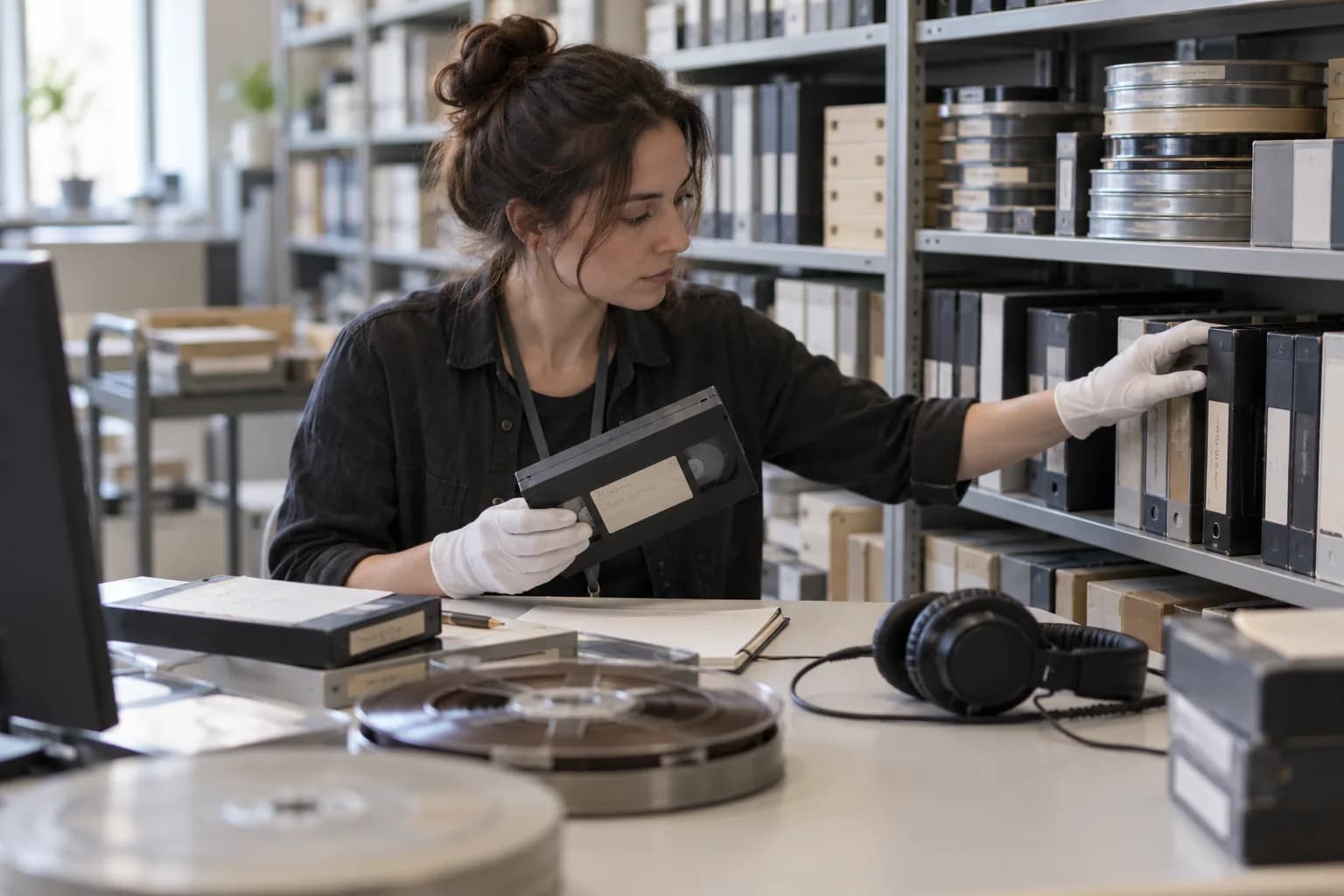
Segment recordings so a result can lead back to a useful interval rather than an entire hour-long file. Preserve source identity, start and end times, language and access scope for each segment. Transcription errors in names or specialist terminology can affect retrieval. Keep a traceable relationship between the original recording and any corrected transcript so reviewers can inspect the underlying evidence.
Combining a maintenance discussion with the next agenda item may make a result confusing; cutting every sentence into isolation can remove the context needed to interpret it. Test segmentation and overlap against the material itself. Training videos, interviews and short news items need not share one splitting rule. Keep segmentation settings versioned so relevance changes can be traced to a specific processing decision.
What should a search result show?
Show the source recording and relevant interval alongside the title and excerpt. Let a reviewer listen to or watch that interval directly. Avoid presenting a similarity score as a probability that a claim is true. If a generated summary is included, distinguish it from the retrieved evidence. Readable wording cannot turn a statement absent from the recording into a supported archive finding.
How should authorized search work?
A user who cannot access a recording should not discover its sensitive title, transcript or summary in search results. Checking permission only at playback can expose information through result cards. Index updates, caches and deletion processes need the same scope. In a pilot, run identical queries with two roles and check how quickly revoked access removes an item from results as well as playback.
How should retrieval quality be evaluated?
Create a query set with relevant intervals marked by people who know the archive. Evaluate the relevance of early results, whether required material is retrieved and whether the timecode leads to the correct passage. Include misspellings, paraphrases, names and queries that should return no useful answer. A handful of successful demo queries can conceal duplication, missed material and confidently irrelevant results in a larger collection.
What should you prepare when exploring Medya Zekâsı?
Medya Zekâsı is relevant to media content search and analysis. File types, archive scope, languages, access roles and representative queries make an initial discussion concrete. Data and observability engineering is relevant to ingestion and ongoing operation. Confirm existing functionality and any additional integration needs against sample recordings rather than assuming a general product description covers every archive format or workflow.
Technical references
Want to apply this approach to your system?
Discuss your technical requirements →